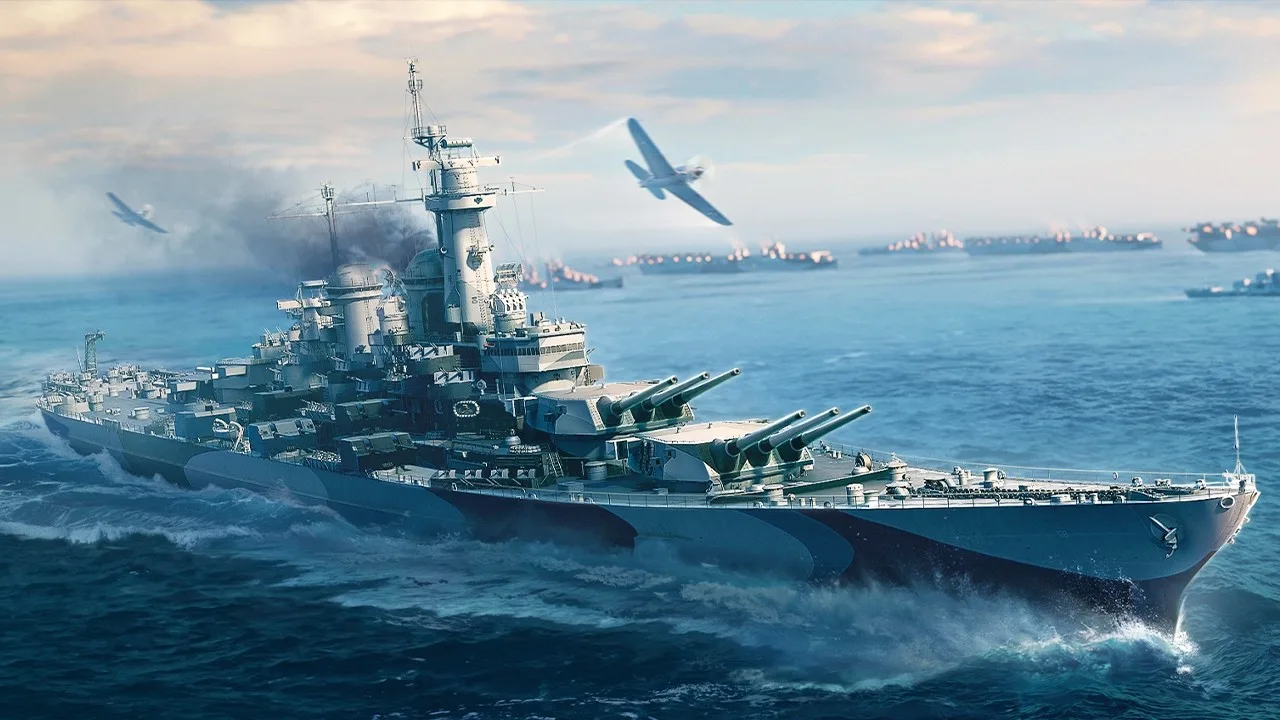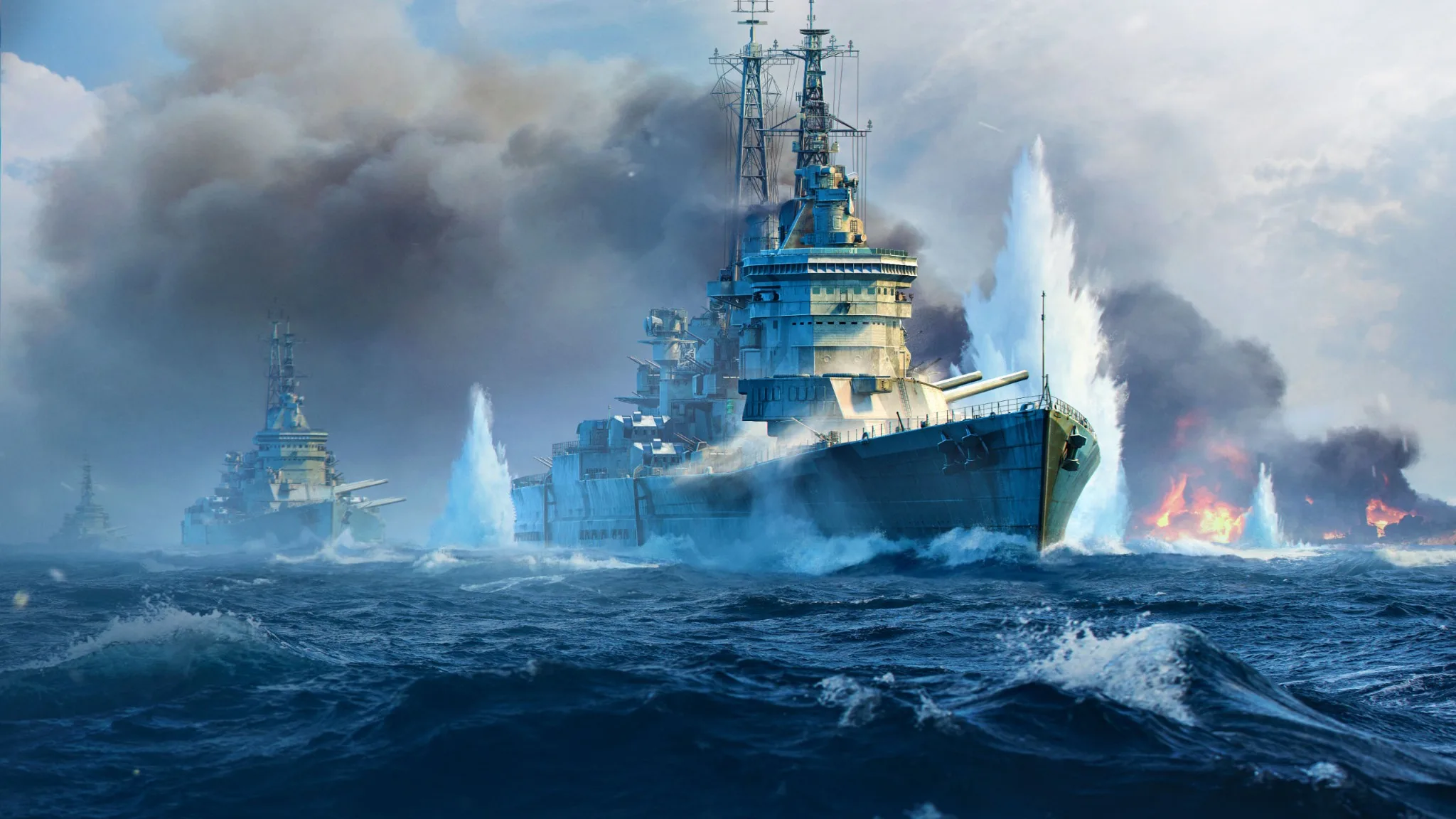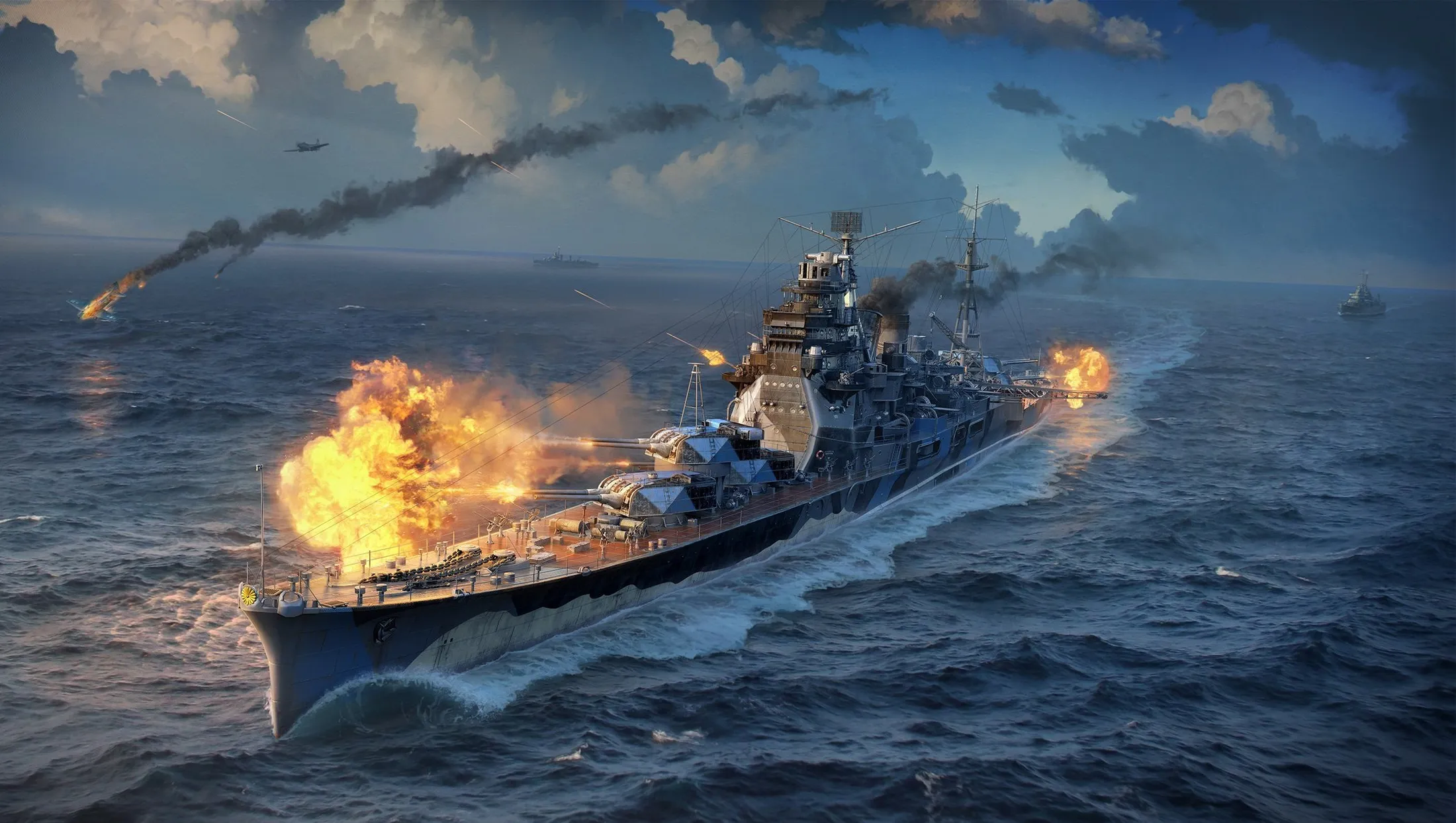
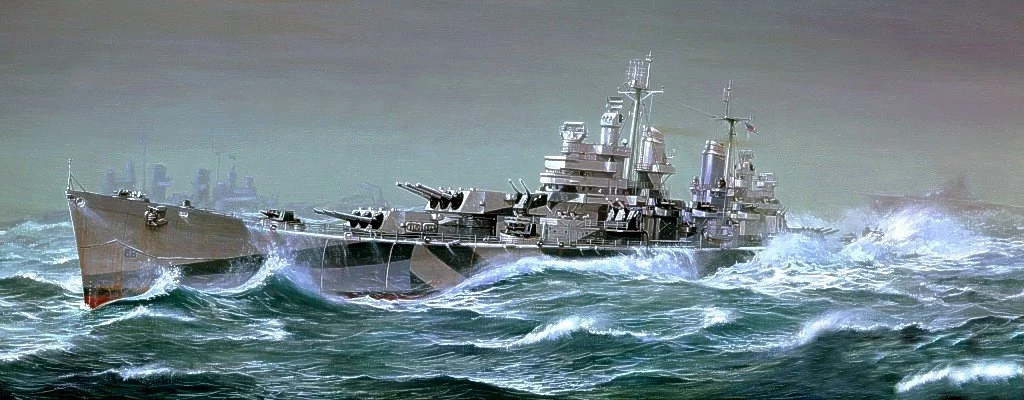
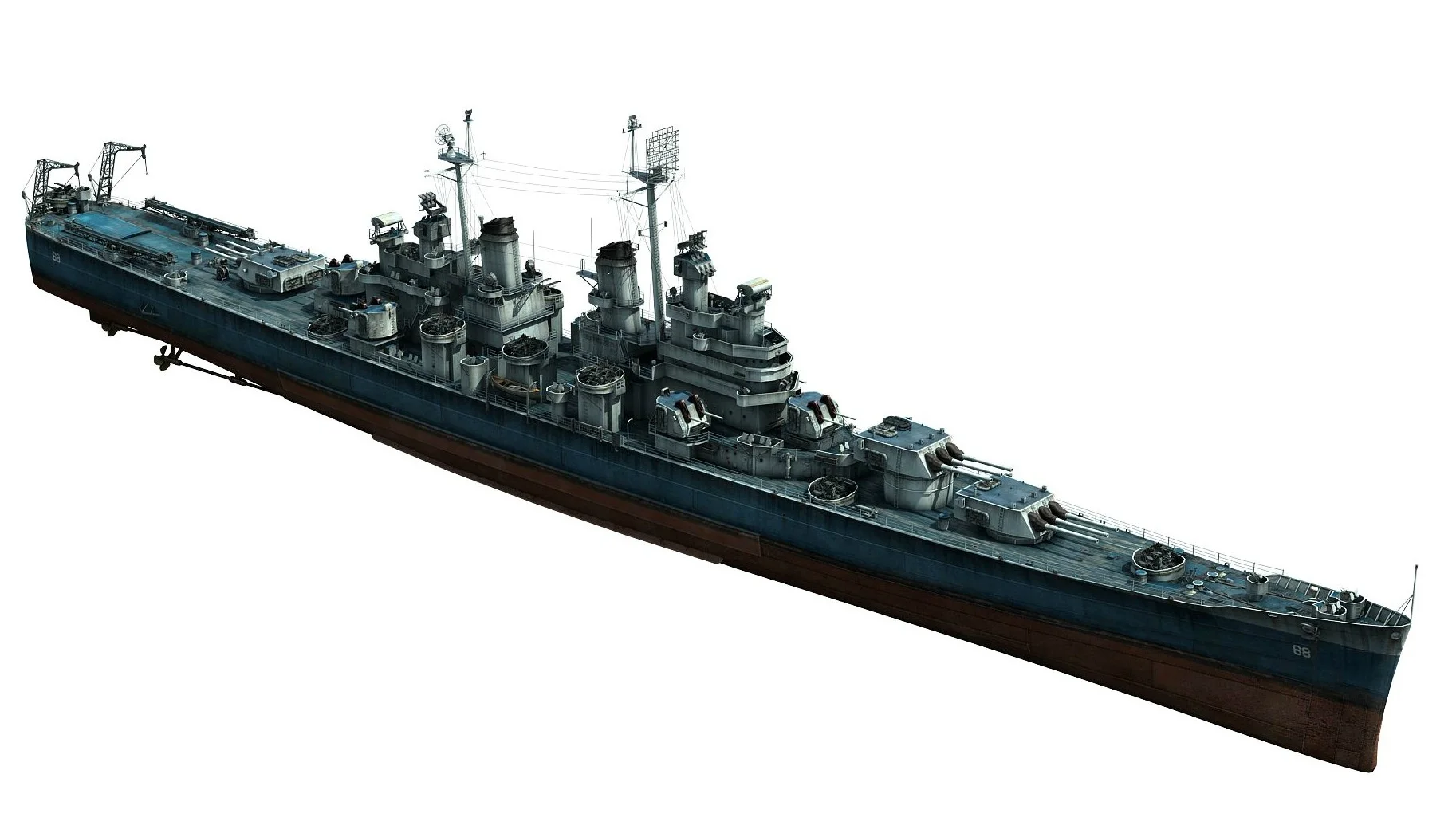
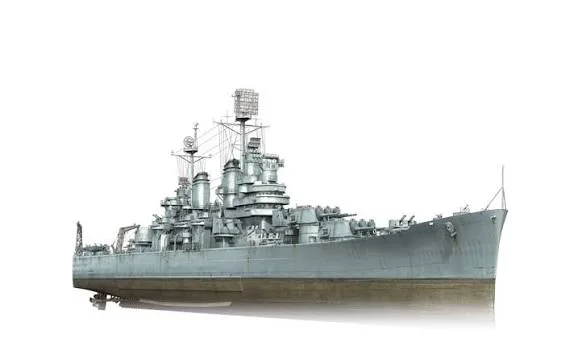
Baltimore is a Tier VIII cruiser for players who know the basics. Concealment, 10 km Radar, improved-angle AP, Repair Party, and high shell arcs support island play and area control.
Why Baltimore is a great school, but not a day-one ship
Baltimore is a Tier VIII U.S. heavy cruiser. It faces Radar ships, battleships, submarines, and opponents who punish broadside. Learn the basics of cruiser play first.
Its nine 203 mm guns, improved ricochet-angle AP, 10 km Radar, concealment, Repair Party, and armor teach positioning and target selection.
Strengths and weaknesses
Current official data lists 3×3 203 mm guns, 10-second reload, 15.83 km upgraded range, and AP beginning ricochet at 60 degrees.
The AP expands opportunities without ignoring armor.
| Strengths | Weaknesses |
|---|---|
| Heavy AP with improved angles | Modest speed and repositioning |
| 10 km radar for 25 seconds base | Limited range and slow shells |
| Strong concealment | No torpedoes |
| Repair Party and hydro/DFAA choice | Broadside is heavily punished |
| High arcs work behind islands | Hard to hit fast targets at range |
Role: control an area and punish mistakes
Baltimore is neither a fast kiter nor torpedo brawler. Occupy a position near a cap or important route, protected by an island or hull angle, then threaten destroyers and cruisers.
Do not radar merely because a cap is contested; ensure guns are ready.
- Position 8–12 km from a key area.
- Keep a reverse exit.
- Avoid crossfire on your broadside.
- Announce radar before activation.
Opening positioning
Choose an island protecting your broadside while leaving fire into the cap. Bow in or use a narrow angle and preserve room to reverse.
Do not glue the ship to the island; leave acceleration and turning space.
- Do not be first spotted in open water.
- Identify crossfiring battleships.
- Track enemy radars and friendly destroyer.
- Wait for initial spotting.
AP or HE
Current 203 mm HE penetrates 34 mm and has 14% fire chance. It is reliable against angled targets, destroyers, and superstructures.
AP is the signature: use it against cruiser broadsides, battleship upper belts, and mildly angled targets. Shells are heavy but slow.
- HE on destroyers and sharply angled targets.
- AP on cruiser broadsides.
- AP on battleship upper belts at medium range.
- Preload or use Gun Feeder.
Radar, hydro, DFAA, and Repair Party
Current radar reaches 10 km for 25 seconds base with three charges.
Choose Hydro for closed areas and torpedoes, or DFAA when carrier pressure justifies it. Repair Party helps recover damage, not repeated broadside errors.
Recommended upgrades
Steering Gears is an alternative for more open-water play; Propulsion fits Baltimore's natural island style.
| Slot | Choice | Reason |
|---|---|---|
| 1 | Main Armaments Modification 1 | Protects guns |
| 2 | Engine Room Protection or Radar Mod 1 | Reliability or radar specialization |
| 3 | Aiming Systems Modification 1 | General accuracy |
| 4 | Propulsion Modification 1 | Island acceleration and reversing |
| 5 | Concealment System Modification 1 | Range control and radar synergy |
Commander skills: 10–14 point core
Build survival, concealment, and consumable availability first. A coherent core includes Gun Feeder, Priority Target, Adrenaline Rush, Superintendent, and Concealment Expert.
Heavy AP Shells, Consumables Enhancements, and Top Grade Gunner are later options.
- 10 points: Gun Feeder, Priority Target, Superintendent, Concealment Expert.
- Add Adrenaline Rush.
- Heavy AP for signature damage.
- Consumables Enhancements for utility.
- Avoid full AA specialization unless consistently needed.
Mid and late game
Once battleships lose HP and destroyers are located, leave the island and use concealment to create a new angle.
Late-game radar and AP become extremely valuable. Save one radar charge while an enemy destroyer survives.
Common mistakes
- Parking too close to the cap with no exit.
- Radaring without allied guns ready.
- Staying on HE against a broadside cruiser.
- Exposing the hull for the rear turret.
- Fighting fast targets at maximum range.
- Assuming the bow is immune to large calibers.